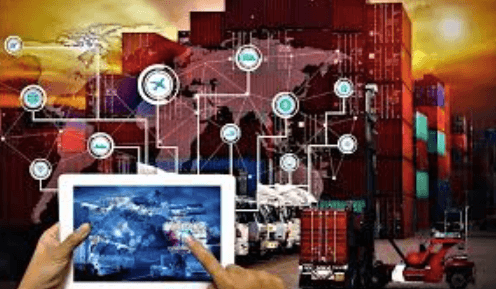
Technology enhances supply chain operations through real-time visibility across carriers, warehouses, and last-mile networks. Data-driven dashboards enable proactive alerts and faster corrective actions. Automation paired with predictive analytics reduces manual tasks and improves forecast accuracy. End-to-end monitoring supports governance, while scenario planning strengthens risk mitigation. The result is resilient, cost-efficient networks that continuously optimize performance, inviting readers to consider how these capabilities unfold in practice and where gaps may remain.
How Technology Is Improving Supply Chain Operations
Technology is reshaping supply chain operations by enabling real-time visibility, data-driven decision-making, and automated processes that reduce cycle times and errors.
The analysis highlights global sourcing efficiencies, where data streams illuminate cost-and-capability tradeoffs.
It also assesses supplier risk through continuous monitoring, scenario planning, and contingency strategies, enabling proactive risk mitigation while preserving autonomy and competitive pricing in an interconnected network.
Digital Transformation in Logistics
The shift toward digital tools in logistics builds on real-time visibility and data-driven optimization established in broader supply chain operations, extending these capabilities to carrier networks, warehouse orchestration, and last-mile delivery.
Digital transformation enables modular flexibility, standardized data governance, and scalable analytics; however, cybersecurity risks require robust, proactive protections.
Organizations must balance automation gains with governance controls to sustain secure, autonomous logistics systems.
Real-Time Tracking and Visibility
The approach emphasizes data integrity, latency reduction, and actionable alerts, supporting decision-making with end to end visibility.
Organizations measure performance through real time tracking accuracy, exception rates, and the speed of corrective actions, driving proactive, freedom-oriented operations.
Automation and Predictive Analytics in Supply Chain
Across modern networks, automation paired with predictive analytics systematically reduces manual intervention while elevating forecast accuracy, risk assessment, and throughput. In practice, automation effectiveness improves process consistency and cycle times, while predictive forecasting sharpens demand signals, inventory health, and disruption resilience. Enterprises quantify gains through measurable KPIs, enabling proactive decisions, reduced variance, and continuous improvement across suppliers, plants, and logistics networks.
See also: The Most Trusted Cryptocurrencies in 2026
Frequently Asked Questions
How Can AI Reduce Stockouts Beyond Forecasts?
AI driven replenishment reduces stockouts beyond forecasts by continuously learning demand signals, supplier lead times, and promotions; dynamic safety stock adjusts in real time, balancing service levels with inventory costs, enabling proactive, freedom-focused supply chains grounded in data.
What Are the Hidden Costs of Deploying Iot in Warehouses?
Hidden costs include maintenance, cybersecurity, and data governance, while scalability factors hinge on interoperability, network bandwidth, and integration overhead. The analysis is data-driven and proactive, appealing to freedom-minded readers seeking transparent, actionable cost-tracking and risk mitigation.
Can Drones Replace Traditional Last-Mile Delivery in Cities?
Drones vs trucks clash in dense grids; aerial routes illuminate limits yet promise speed. Urban delivery feasibility hinges on traffic, noise, and regulation, with data suggesting parity only in niche corridors before scale. The vision remains proactive, bound by constraints.
How Secure Is Data Shared Across Supply Chain Partners?
Data sharing across supply chain partners exhibits robust safeguards but varies by governance maturity; a proactive, data-driven approach emphasizes data governance and risk assessment to quantify exposure and strengthen controls, enabling measured freedom-with-security in collaborative operations.
What’s the ROI Timeline for Robotics in Fulfillment Centers?
The ROI timeline for robotics in fulfillment centers varies, but analytics show break-even within 12–24 months with steady gains. AI deployment and robotics integration, RFID tagging, and predictive maintenance drive throughput, accuracy, and cost-per-pick reductions for freedom-seeking operators.
Conclusion
Technology-driven supply chains are becoming more transparent, agile, and resilient. Real-time tracking, automation, and predictive analytics convert data into actionable insights, enabling proactive risk mitigation and cost optimization. End-to-end monitoring sharpens alerts and accelerates corrective actions, while scalable analytics support governance and performance improvements across carriers, warehouses, and last-mile networks. In this data-driven era, a well-orchestrated digital backbone acts as a lighthouse, guiding operations toward higher service levels and lower total costs amidst uncertainty.