Reviewed by a licensed speech-language pathologist
Quick answer: A speech delay does not automatically mean autism. A delay is about the timing of language, while autism involves broader differences in social communication and behavior. Many children with a delay are simply late talkers. Only a full evaluation can tell the two apart, and the sooner a family asks, the better.
When a toddler is slow to talk, one of the first fears many parents name is autism. It is an understandable worry, because a language gap is one of the things that can prompt an autism evaluation. But a delay in talking is common, and it points in many directions. Some late talkers catch up on their own. Some need speech support. And in some cases a delay is part of a wider pattern. The question of whether a speech delay means autism has a clear starting answer: not by itself.
What is a speech delay on its own?
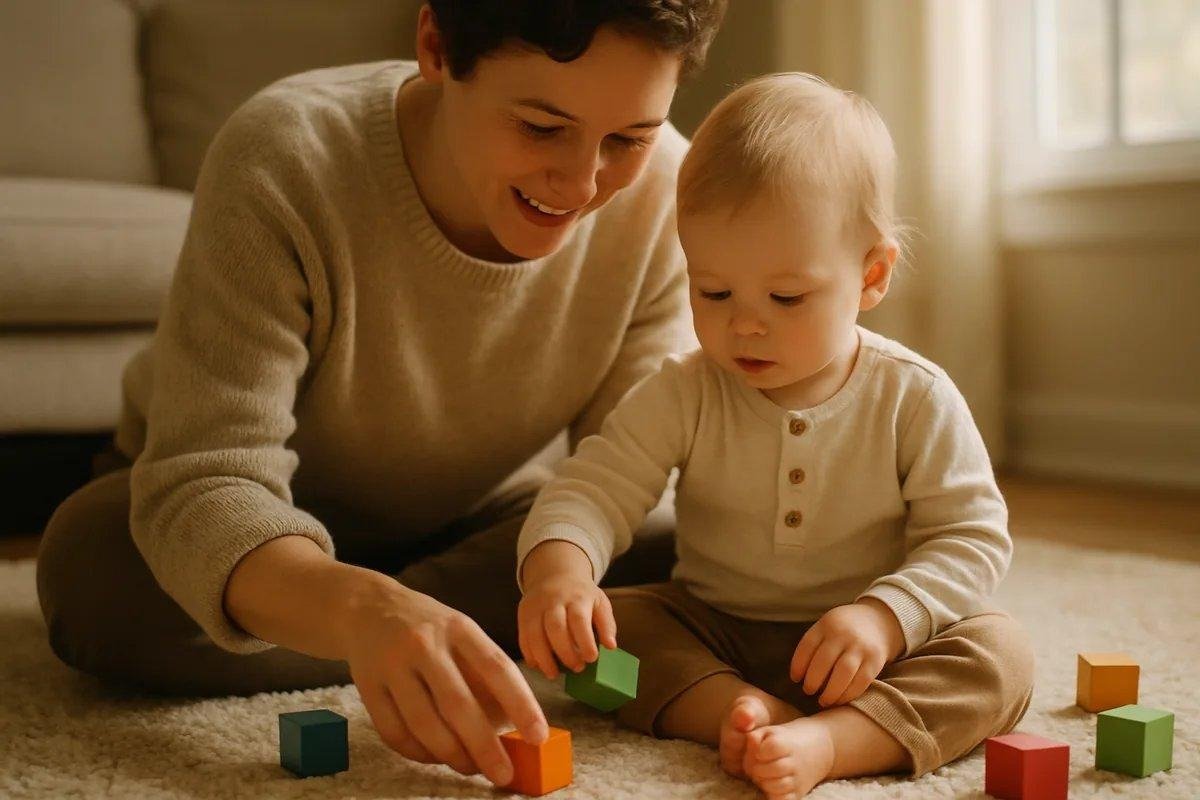
A speech or language delay means a child is developing communication later than the typical range for their age, though usually along the same general path. A child described as a late talker often understands language well, uses gestures, and reaches for connection, but simply has fewer spoken words than expected. The American Speech-Language-Hearing Association describes late language emergence as a delay in spoken language with no other developmental concern present. In those cases the child is behind on words, not on the social side of communication.
Because typical ranges are wide, one missed milestone rarely tells the full story. Clinicians look at how a child understands language, how they try to use it, and whether the gap is closing or widening over time.
What is different about autism?
Autism is not defined by a language delay. It is defined by differences in social communication and by patterns of behavior and interests. A child on the autism spectrum may have delayed speech, but the distinguishing features sit elsewhere: how they share attention, respond to their name, use eye contact, and play. Some autistic children speak on time or even early, yet use language in unusual ways, such as repeating phrases rather than using them to converse.
This is why the same starting symptom, few words at age two, can lead to very different conclusions. The words are only part of what an evaluator watches.
Which signs point one way or the other?
No single behavior settles the question, but certain patterns are worth noticing. A child with a simple speech delay usually still:
- points at things to show or request them
- looks back and forth between an object and a parent to share interest
- responds to their name and follows a point
- uses gestures like waving, nodding, and reaching
- enjoys back-and-forth social games
Patterns that more often prompt an autism evaluation include limited eye contact, not responding to a name by the first birthday, little pointing or showing, repetitive movements, strong reactions to changes in routine, and unusual play such as lining up toys rather than pretending with them. The Centers for Disease Control and Prevention publishes milestone checklists that describe both language and social behaviors by age, which can help a parent organize what they are seeing.
Can a child have both?
Yes, and this is where the either-or framing breaks down. A speech delay and autism are not opposites, and one does not rule out the other. Many autistic children do have language delays, so a delay can be part of autism or entirely separate from it. A skilled evaluator does not try to fit a child into one box. They describe the whole profile: language, social communication, play, and behavior. That is why the answer to whether a speech delay means autism is best settled by assessment rather than by a single trait.
How do parents get a clear answer?
The reliable path is an evaluation. For children under three, this runs through early intervention, and parents can request it directly in every state without waiting for a referral. For older children, the public school system and a pediatrician can start the process. A speech-language pathologist assesses communication, and if autism is a question, a developmental specialist evaluates the social and behavioral side. The National Institute on Deafness and Other Communication Disorders notes that early evaluation supports better outcomes, and the American Academy of Pediatrics encourages families to raise concerns rather than wait and watch.
While a family waits for appointments, gentle daily practice at home can support a child’s talking regardless of what the evaluation eventually shows. Voice-first, play-based tools such as littlewords.ai give a child short, low-pressure speaking practice through play that a parent can start at home. That kind of daily practice is one option among many and works as a supplement to professional support, not a replacement for an evaluation or for therapy. It should stay light and playful rather than becoming a test.
Key takeaways
- A speech delay does not automatically mean autism. It is one possible sign among many.
- A delay is about the timing of language, while autism involves broader social communication and behavior differences.
- Signs like pointing, shared attention, and responding to a name suggest the social side is intact.
- A child can have both a delay and autism, which is why a full evaluation matters more than any single trait.
- Acting early, through evaluation and everyday talking practice, carries little downside.
Frequently asked questions
Does a speech delay mean autism?
Not on its own. A delay is one possible sign among many, and autism involves social communication and behavior differences. A full evaluation is the only reliable way to tell them apart.
What is the biggest difference between a speech delay and autism?
A child with a simple delay usually still connects socially through pointing, eye contact, gestures, and shared attention. Autism tends to show broader differences alongside any language gap.
Can a child have both a speech delay and autism?
Yes. The two are not mutually exclusive. Many autistic children have language delays, and an evaluation looks at the whole picture.
At what age can autism be reliably identified?
Some signs can appear before 18 months, and many specialists can make a reliable diagnosis by age two. Parents can request an evaluation at any point.
Should I wait to see if my child catches up?
Health agencies encourage acting early. Early support carries little downside, and an evaluation can bring reassurance even when nothing serious is found.
Sources
- American Speech-Language-Hearing Association: Late Language Emergence (asha.org)
- Centers for Disease Control and Prevention: Developmental Milestones (cdc.gov)
- National Institute on Deafness and Other Communication Disorders: Speech and Language (nidcd.nih.gov)
- American Academy of Pediatrics (HealthyChildren.org): Toddler Development (healthychildren.org)
- American Speech-Language-Hearing Association: Speech and Language Developmental Milestones (asha.org)